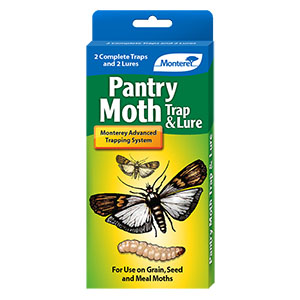
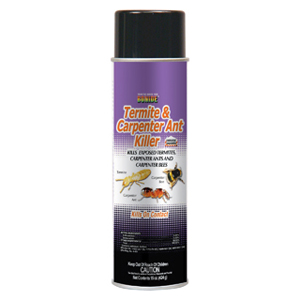
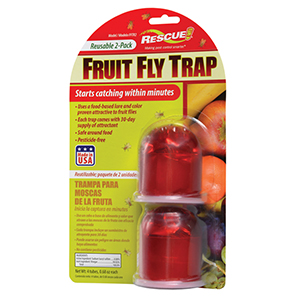
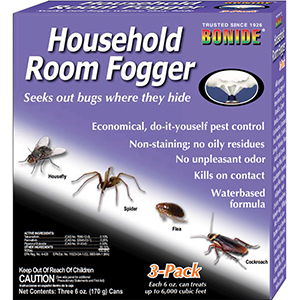
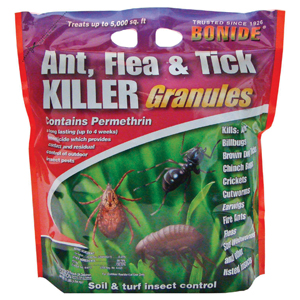
Fall is on our doorstep and it’s time to turn our “prevention attention” from outdoor to indoor. From the first chilly night of the season, warm-blooded animals begin thinking about hibernation and look for openings and opportunities to take up winter residence. Insects are seeking warmer climates as well, and likely will find the smallest of cracks and crevices to enter your home. Be assured, no home is insect-free. First Steps in Fighting Back Advise your customers to closely survey the foundations of their homes to identify cracks and openings that insects or, if large enough, animals could gain entry. These should be sealed up before freezing weather sets in. Common insects include ants, crickets, grasshoppers, earwigs, sowbugs, centipedes, spiders, bees, fruit flies, termites, and stink bugs. Common animals include chipmunks, squirrels and birds. Space between window frames and door frames can also be easily accessed. It’s an ideal time to install weather stripping. Observe the condition of your caulking around these frames, too. While weather is still warm, homeowners might caulk openings, especially when the ingredients are pliable and easily applied. Immediately inside the home, consumers should survey the ceilings, perimeter walls, and corners for spider webbing and promptly remove it. Remind your customers to vacuum carpets thoroughly to remove fleas and ticks that may have hitched a ride with their pets from outdoors. Fall is also a good time to replace flea collars and wash pet beds. Upholstery should be moved and inspected, as these areas are a perfect sanctuary for overwintering insects. Pantry areas are often overlooked in spotting insect issues. Consumers should make time to remove outdated products including flours, grains and even seeds. This includes birdseed! Stocking birdseed inside for long periods of time may offer the perfect opportunity for grain weevils to hatch and emerge as tiny flying moths. Since chemistry is not sprayed in areas of foodstuffs, options like the Pantry Pest Trap are highly recommended for indoor use. Encourage your customers to also give pantry shelves and floors a good wipe down using a suitable household cleaner labeled for use in cabinets and around foods. With the last of the harvest brought indoors, the occurrence of fruit fly is commonplace in homes. While remedies found on Pinterest can be questionable in their effectiveness, an indoor trap from Rescue is a safe and reliable option. Choosing Your Chemicals for Home Use When selecting a chemical to treat any insect problem, consumers must review the product label to ensure it’s suitable for WHERE the product will be used. Some chemistry is only to be used OUTDOORS. Other products are available for indoor use and indoor/outdoor (perimeter) use. When applied as directed, these are safe to use around pets and children. Consider stocking several options to meet varying customer needs. Remind your customers to read the directions carefully. Most all directions clearly state that once you spray, you must make sure the solution is completely dry before allowing pets or children to reenter the area. You’ll also notice that precautionary declarations on the label will vary based on the type of chemical. Such messages are boldly stamped Caution, Warning or Danger. It’s rare to see anything available for indoor use besides a Caution label. Your choices for types of delivery vary from aerosols to the popular ready-to-spray chemicals. Long-Term Control Perimeter sprays are popular among consumers for home insect control. Such products are usually applied upwards along the foundation wall up to three feet from the ground. Spraying under door jambs, around outdoor window frames, and even patio and under garage doors will help prevent insects from entering your home. These long-term products last anywhere from three months to up to a year. When a customer needs further clarification on their chemical application, make sure they know where to go for help. Most products include a toll-free phone number on the product label, which consumers can use to contact the manufacturer directly. There may be another phone number for medical assistance. Whether you’re advising a homeowner customer or a store employee, the importance of personal protection can’t be overstated. Use common sense, of course, and don’t eat, drink or chew gum when applying chemicals. Cover exposed skin thoroughly and protect eyes from spray and drift. After an application is made, wash hands with soap and water, paper towel dry and dispose of materials properly as stated on the product bottle. Your key to success is knowing that the manufacturer makes these products safe when used as directed on the product label. Follow directions all the time, every time.
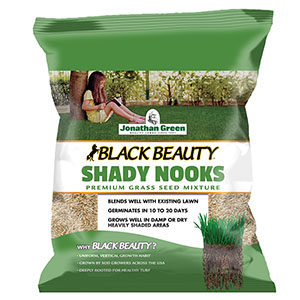
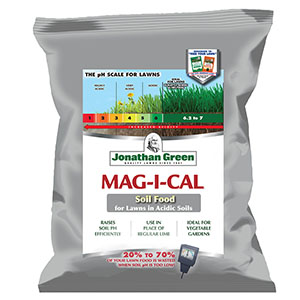
This year’s spring and summer seasons were among the wettest in recent memory on the East Coast. Every region in the country has pendulum swings, alternating years of hot and dry weather with wet and cool conditions. This year, it was the East’s turn for a soaking. While the West Coast endures historic heat and drought, the East Coast has been pounded by a constant southerly flow of torrential rain, setting records for daily and monthly totals in many states along the Atlantic seaboard. Usually by summer’s end, East Coasters see signs of flowers, trees, and lawns in declining health. Not this year! Here are some tips to optimize lawns and gardens as you and your customers anticipate cooler fall weather on the horizon. The Backyard Quagmire Stepping into your backyard shouldn’t require rubber boots. With above-average rainfall, drainage issues are easy to spot when water doesn’t recede or disappear within a half hour or so. This standing water causes stress on turf grasses and can lead to lawn diseases if the turf is unable to dry out. The rate at which water percolates or drains through the topsoil slows when there’s nowhere for water to go or when the subsoil is severely compacted to restrict liquids from absorbing into the ground. While all that rain keeps the grass growing, the lawn mower can make a bad situation worse. Some turf diseases can be spread when a homeowner mows across an entire lawn area. The act of mowing itself, especially with dull, wet mower blades, can create further lawn stress. Advise your customers to keep their mower blades sharpened and engines tuned. Encourage them to raise the mower deck a notch or two higher – doing so will reduce drag on the mower engine, especially when the grass is wet. Curing Standing Water Issues If water surrounds root systems long enough, it disrupts oxygen exchange for the plant, eventually killing off root development. Top growth is reduced or, in extreme cases of waterlogged root systems, the plant suffocates. Lawn care specialists recommend using core aeration machines for immediate relief of compacted soils. These machines drill into the ground, pull out plugs and deposit them across the lawn’s surface. These holes are usually positioned two inches apart (and two inches deep) exposing crevices to allow air, water and eventually the soil that was just pulled to penetrate the surface. Competing plants like trees and shrubs can also drain nutrients and water away from turf grass. The technique of using core aeration along with a generous application of garden gypsum loosens the tension of the soil’s surface and allows water to eventually drain through or percolate. Another source of excess water runoff is from the homeowner’s gutter downspouts. The roof of a typical home collects a vast amount of water from its surface and deposits it into the gutters and eventually the downspouts. These channels of high-volume water can easily pool in areas that may not allow the water to move away from the house. Downspouts may be extended away from the home and divert or channel water further away from pooling in problem areas. Standing water is also a key breeding ground for mosquitoes. Populations can surge quickly if standing water is left undrained. Kickstarting Root Development Fall is the optimum time to start grass seed! The days are still warm and the nights are cool, allowing the seed to receive adequate moisture and germinate quickly. Choose to stock only high-quality perennial grass seed types versus annual grass seed types to provide your customers with the greatest value. Advise your customers to be patient: Depending on the type of grass seed, germination may take up to three weeks. Their patience, however, will be rewarded. Before making a specific grass seed recommendation, engage with your customer to understand their lawn conditions. If the lawn receives full or near-full shade, they’ll need a seed that can thrive in densely shaded areas. Other types are optimized to perform in wet conditions. Poa trivialis is one of those types of grass seed that grows where others fail. In many cases, a grass seed mixture (a blend of different types of grass seed) is often the best bet. The benefit of using a seed mixture is that one type of seed can establish when others won’t. (Some types may include: ryegrass, hard or chewings fescues, turf-type fescue, and Kentucky bluegrass.) One key to success is to ensure good seed-to-soil contact between the grass seed with the ground. Another key is keeping the seed moist to establish germination. Whenever your customers are ready for their fall lawn renovation, encourage them to check the lawn’s pH as well. If soil is acidic, an application of lime is in order. This will allow their seed-starting fertilizer to work its best in supplying needed phosphorous to enhance root development. The quicker the spread of the root system, the easier it is to establish top growth of new grass seed by supplying nutrients needed for speedy uptake. While new laws have eliminated the phosphorus content from almost all lawn bagged fertilizer product, seed-starting fertilizers are exempt and able to provide this important element within their formulas. Even if this summer was a washout where you live, there’s still time for meaningful lawn renovation. Your consultative selling and your customers’ efforts in the fall will yield positive results in the spring, with a greener and stronger lawn that’s better able to withstand future rainy seasons! Pick a Starter Fertilizer & quality Grass Seed Mixture from one of these great manufacturers!
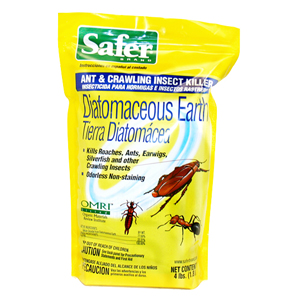
Many of us recall this song from childhood: “The ants go marching one by one, hurrah, hurrah.” It seemed innocent enough back then. Even today, we have ant farm kits available to entertain the most daring and inquisitive minds for willing parents. But as homeowners, we view ants through a different lens, and face the challenges of identifying and controlling ants in and around our homes. Ants are problematic just about everywhere in North America, whether it’s the nuisance type or ones with a painful bite. They’re found wherever there’s food, moisture or decay. Here are some common ant species to look out for, and the appropriate courses of action to combat each. Depending on your geographic region, you may choose to stock solutions for several different species. Space Invaders The Black Garden Ant is a species found under rocks, bricks, lumber and crevices. It’s very active in foraging for food and keeping its colony (and queen) alive for a few decades. Black Garden Ants eat a variety of foods including soft fruits like raspberries and strawberries, small seeds, leftover food particles, small insects and even sugar nectars. Our industry manufactures specific chemistry to neutralize and kill transparent ant colonies in and around the home along with control products for lawn areas. The most destructive species of ants to farms and agricultural crops include the Leaf Cutter Ant, which can strip leaves of citrus trees, and the Harvester Ant Research statistics estimate that they cost the crop industry over $1 billion dollars in destroyed vegetation. The Carpenter Ant tunnels and makes its nests usually in moist or decaying woods and, although they don’t eat wood like the termite, they can weaken structural integrity if left unchecked. It’s a reportable condition with real estate transactions. These ants don’t sting, but they can bite. Just killing the ants that are visible doesn’t eliminate the colony or stop progression. You need to eliminate all colonies, including main and satellite locations. Ant baits containing the active ingredient Borax or boric acid are the most common method of treatment for ant control. However, Carpenter Ants are treated with unique active ingredients developed for indoor and outdoor use. Unwanted Dinner Guests In Southern regions, the Red Imported Fire Ant is a painful biting and stinging ant that was accidentally imported from South America in the 1930s. They build nesting mounds in just about any soil type but prefer open grounds like pastures, lawns and fields. Fire Ants reproduce rapidly with aggressive and swarming behaviors. Baiting with the appropriate control product near these mounds in early spring and fall allows worker ants to bring the bait back to kill the queen and the colony. Another food-craving ant that’s very common indoors is the Sugar Ant. This little ant is attracted to sugar and grease spills. Sugar Ants spread the word quickly to the colony to follow the trail, collecting and redistributing these foods to the queen and colony. White vinegar is a natural repellent to sugar ants as the acid kills the ant and the smell deters. Another common natural product for treatment is diatomaceous earth, which can be used indoors and outdoors. Encourage do-it-yourself homeowners to keep monitoring the common trails for additional visits. If the situation continues to escalate, they may need to seek the help of a professional ant man. With early and aggressive treatment, hopefully the only Ant-Man they’ll see is in the movie theater.
Optimum performance and good health go hand-in-hand with our perception of fitness, correct? How about your customers’ plants? Are they as fit as they could be? Ornamental plants crave specific elements in their diets. All are important, but iron is especially so. Imagine what would happen if we removed iron from our diets: We’d feel a range of negative effects. Plants are no different.
The Green Machine When we think of maximizing green in our industry, we usually think about fertilizer. The more, the better, right? It’s not that simple. Too much fertilizer can be damaging through excessive salts or overwhelming nutrient uptake, the result of which can actually stop plant growth in its tracks. New and tender root fibers can be irreversibly damaged from excessive feeding of nutrients that offer quick uptake. In fact, this mobility within the plant teaches us how we might diagnose specific symptoms of nutrient deficiency. Age of the plant, moisture, temperature and even the root mass can affect the movement of nutrients throughout a plant.
Iron Chlorosis
When iron isn’t readily available to plants and lawns, iron chlorosis is a common result. Symptoms include yellowing leaves, slowly developing growth, early leaf defoliation and/or light green leaves with darker veining. These characteristics are often first noticed on young plant foliage, especially in warmer summer temperatures after a cool, wet spring. Although iron is often present in the soil, uptake by plants can be restricted when soil pH is too high (i.e., pH levels above 6.0). A pH adjustment, with the addition of sulfur or iron sulfate, may be just the ticket for customers who are seeing these symptoms their gardens. These products may be applied as foliar sprays or by incorporating a solution to the drip line around the plant or as application to the lawn. Iron can condense on the foliage, causing pitting. It’s best to rinse the foliage with clear water following any iron application before it dries.
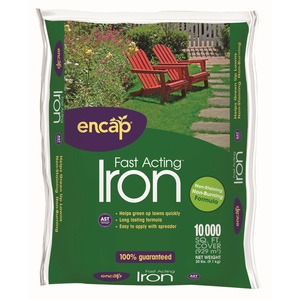
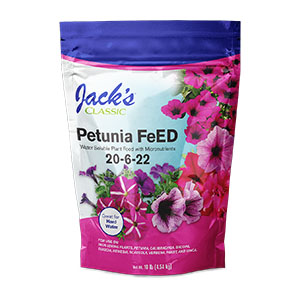
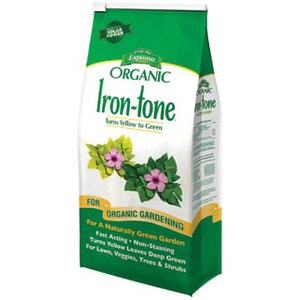
Read the Fine Print Lawn care products are available from many manufacturers, but they’re not all created equal in how plants receive their nutrients, especially in the summer months. Extensive research has been devoted to increasing the speed with which a fertilizer’s effects are visually noticeable in plants and lawns. Some fertilizers include microbes and a non-staining iron supplement to help promote faster greening and deeper roots, while improving soil structure. These fast-acting iron supplements generally range from 1%-12% iron to enhance the deep green color of a lawn without excessive growth. Some high-tech formulas contain humates and gypsum to speed uptake and help condition the soil. Additional Iron (Fe) Products Quite a few iron-enhancing products are available on the market today. Options include fertilizers tailored for iron-hungry flowers like petunia, bacopa, calibrachoa and tomatoes! While ferrous sulfate has been the main ingredient to control and kill lawn moss for years, advise your retail customers to sweep remaining granules off concrete driveways and sidewalks to prevent staining. One of the newest technologies comes from naturally occurring iron-based herbicides or FeHEDTA. Bonide introduced a unique Weed Beater Fe formula that kills broadleaf weeds, moss, algae and disease, plus greens up your lawn. Results are usually visible within hours and it’s pet-safe. This 5-in-1 product effectively works in cooler temperatures, too! This ready-to-use product represents a whole new way for consumers to pump iron!
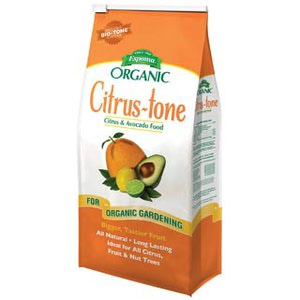
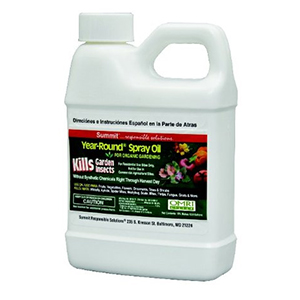
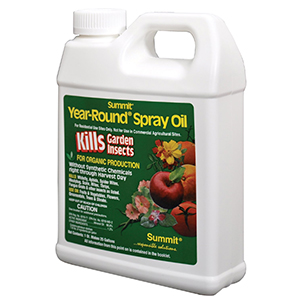
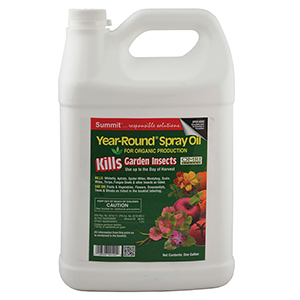
Home gardening has enjoyed a centuries-long love affair with fruit trees. As far back as the 1750s, fruit trees had a prominent place in many backyard colonial gardens. Researchers at Colonial Williamsburg have explored documentation and excavation of many on-site water wells, revealing long-kept secrets of landscaping from our nation’s early years. Many native species of crab apple and cherry trees were bitter for consumption. We owe almost all of our fruit-tree origination to Europe. While nut-baring trees like chestnut and pecan were popular in the New World, fruit trees like apple, peach, plum, quince, pear and even nectarines arrived from overseas via coastal ports. Mostly dormant and bare-root plants were quickly planted on homeowner plots and in nearby orchards. Homesteading 2.0 While fruit trees have transitioned into niche status among newer generations, their fans are loyal. Homemade jellies and preserves, and fresh-picked fruit are seeing a resurgence in popularity. Mail-order catalogs have largely been replaced by the internet and hard-to-find heirloom cultivars are available. Over the past 30-40 years, homeowners have been discouraged by failures to produce good quality fruit, often due to lack of knowledge regarding tree care and maintenance. Fruit trees can also be insect magnets, especially for Japanese beetles and bees. When demand for fruit trees began to wane, supply soon followed suit. Spearheading a Harvest Citrus fruit is especially on-trend among younger consumers, driven at least in part by the craft beer industry. Many popular IPA and craft beers are infused with citrus flavors. The pacesetter for this was, without question, Corona beer, whose television commercials feature the signature lime wedge atop the beer bottleneck. A higher demand for lemon and lime trees has even changed the way we sell plant stock today. Grafting both lime and lemon onto the same rootstock has offered a unique two-for-one sale for space-saving gardeners. Dwarf varieties have improved dramatically over the years; many are plantable in large containers on a deck or patio. Trekking to the local orchard for you-pick apples, peaches and cherries is a favorite fall activity for many families. Some regions of our country really do a great job of promoting and hosting these events! The comeback of canning, jams and jellies, pickling (my favorite is pickled pears) and specialty baking, all using fresh harvested fruit, is another reason to promote fruit tree plantings. Simple Steps for Planting Fruit Trees Advise your customers to plant their trees in well-drained holes that allow the root ball to stand slightly above level grade. The area should also receive at least 6 hours of sunlight per day. A soil conditioner or soil amendment can be added, provided it’s not fresh manure, to the existing topsoil drawn from the hole. Homeowners will want to keep ample spacing between trees. A minimum distance of 12 feet is a good guideline, unless dwarf or espalier varieties are involved. Of course, watering fruit trees is vital to their success, especially if planted in sandy soil. Deep watering helps establish vast root systems. Additional Care Be sure to stock horticultural spray oil, for use to smother overwintering insect eggs. Bonide and Summit offer quality products in this category. The consumer should spray early in the season, once temperatures rise above freezing but prior to bloom and leaf development. Fertilizer can be applied as long as ground isn’t frozen using traditional feeds like 10-10-10. There are proven organics available from Espoma like Citrus-tone 4-3-2, Plant-tone 5-3-3 and the popular favorite, Bio-tone Starter Plus 4-3-3 for all planting conditions. A topdressing of mulch (2-3” inches) will also help conserve moisture. Occasional pruning may be needed to trim away dead wood or sprawling branches. Timing is important on WHEN to prune. Apples, pears and plums are usually pruned during winter months while they’re still dormant. Cherries are pruned during late spring or summer. When in doubt, refer your customer to an arborist or a local county extension service. Above all, encourage your customers to enjoy the fruits of their own labor!